🥳Release Day Blitz for Death At Will!🥳

Facebooktwitterredditpinterestmail

Title: Death At Will

Series: Adele Gossling Mysteries: Book 3

Author: Tam May

Genres: Historical Cozy Mystery

Release Date: October 29, 2022

Teddy Roosevelt is running for president and even Arrojo can’t deny progressive reforms are here to stay. Rebecca Gold, one of the era’s New Women, chooses just this time to set up her own law practice in Arrojo and lands the affluent Thea Marsh as her first client.

When Thea dies unexpectedly, the trail of suspects leads to her own family. The beloved and favored eldest son, Theo, is accused of the crime. Could such a placid man really be guilty of matricide?

The police think so. So Rebecca turns to her new friend in town: businesswoman and fellow suffragist Adele Gossling. Adele has already proven herself to be adept at helping the local police solve crimes, much to the shock and chagrin of the town’s conservative citizens. Despite promises never to involve herself in crime detection again, how can she refuse a friend in need?

Will Adele make a case against Theo’s guilt for the police out of a stained teacup, a fountain pen nib, ashes that should have been in the fireplace, and daisies that should have been fresh? Or will Theo go to the gallows and the real murderer escape justice?

“The characters are true to life, and the early methods used in criminal detection are fun to read.” – Amazon reviewer

What reviewers are saying:

“Entertaining page-turner!”

“Intrigue that will draw you in and make you want more.”

You can get your copy of the book at a special promotional price at the following online retailers.


Excerpt

Within fifteen minutes, her brother sauntered into the shop, the silver deputy sheriff’s badge shining in the sunlight. “All right, Del, why the hush-hush?” 

“Does the sheriff know you’re here?”

“I told him I was going to the Bush farm to check on that stolen horse,” he said, amused. “Those girls of yours insist you have a murderer locked in your storeroom.”

Adele laughed. “I’m afraid they let their imaginations run away with them. No, no murderer, Jack.”

“Not yet,” Nin said.

“Are we playing guessing games now, Miss Branch?” he asked in a stiff tone.

“I never guess, Mr. Gossling,” she answered. “I take evil and death in any way it comes.”

He crossed his arms, looking at his sister. “Well?”

She told him all Rebecca had said about her employer’s death as the woman sat silently with her hands in her lap. It was as if Jackson’s badge made her nervous again.

He looked at Rebecca. “It would be better, Miss Gold, if you would tell the sheriff of your suspicions, just as my sister suggested.”

“I promised Theo I wouldn’t,” she insisted. “I promised him there wouldn’t be any scandal.”

“But if Thea Marsh didn’t die of natural causes —”

“I didn’t say that wasn’t true!” she insisted. “I merely said I had a feeling about it.”

He sighed. “I understand your trepidation. But there’s a procedure to these things, you know.”

“Fiddlesticks!” Nin burst out. “Don’t you believe in helping a friend?” Rebecca gave her a grateful look.

“When there’s no crime involved, I’m the first to help anybody,” Jackson’s tone was crusty. “But if there is a crime—”

Adele took his arm. “We need your professional and astute eye, Jack. If there is nothing in it, no harm done. If there is something, Rebecca will convince the family to go through the proper channels.”

“They won’t have much of a choice,” he remarked.

“Then you have no reason to object a look around Mrs. Marsh’s room, do you?” She gave him a sharp look. 

“I have no objection as long as there is a method to it,” he insisted. “One simply can’t go bursting into a room with a magnifying glass hollering ‘murder afoot!’”

“Don’t tell me the Anspatches never entered a room permission.” She eyed him.

He looked away and she was sorry she had spoken. But then, he said, “I suppose it can’t do any harm to look around as long as the family consents, and we’re very careful. But only if we have their full consent, Del.”

“That you have, deputy,” Rebecca said in a relieved tone.

And I have your full promise if there is anything in the least suspicious, you go to the sheriff.”

“You have my promise.” She bowed.

About the Author

As soon as Tam May started her first novel at the age of fourteen, writing became her voice. She writes engaging, fun-to-solve cozy mysteries set in the past. Her mysteries empower readers with a sense of “justice is done” for women, both dead and alive. Tam is the author of the Adele Gossling Mysteries which take place in the early 20th century and feature sassy suffragist and epistolary expert Adele Gossling. Tam has also written historical fiction about women defying the emotional and psychological confinements of their era. Although Tam left her heart in San Francisco, she lives in Texas because it’s cheaper. When she’s not writing, she’s devouring everything classic (books, films, art, music) and concocting yummy vegetarian dishes in her kitchen.

Social Media Links

Facebook: https://www.facebook.com/tammayauthor/

Instagram: https://www.instagram.com/tammayauthor/

Pinterest: https://www.pinterest.com/tammayauthor/ 

Amazon Author Page: https://www.amazon.com/Tam-May/e/B01N7BQZ9Y/ 

BookBub Author Page: https://www.bookbub.com/authors/tam-may

Goodreads Author Page: https://www.goodreads.com/author/show/16111197.Tam_May

instagram
Facebooktwitterredditpinterestmail

Tragedy and Survival: The Ohlone of California

Facebooktwitterredditpinterestmail

Today is Columbus Day, a day many of us in America learned about in school. When I learned about it (I won’t tell you how long ago that was…) teachers only talked about Columbus but not about the people already inhabiting America or about their suffering and their strength. Luckily, we live in much more enlightened times and kids today are also taught that this is also Indigenous Peoples’ Day, a celebration not just of Columbus but also of the Indigenous people who were already on American soil.

Photo Credit: A modern Ohlone family in traditional Ohlone dress, taken 21 February 2-15 and displayed in the Palace of Fine Arts in San Francisco, CA: Noahedits/Wikimedia Commons/CC BY 2.0

I came across the history of the Ohlone of California after doing research for Book 5 of the Adele Gossling Mysteries (coming out next year). I was interested in Native American tribes that settled specifically in the Bay Area and the Ohlone interested me. Calling the Ohlone a “tribe” is actually incorrect. These people indigenous to the Bay Area actually made up at least fifty tribes with different languages, practices, and cultures. The Ohlone population decreased with rapidity during the years Mexico owned California for several reasons, including infant mortality, plagues, and persecution. By the mid-nineteenth century, the Ohlone population had been reduced by almost ninety percent. 

That was also the time when the already dwindling Ohlone population suffered more tragedies at the hands of the new American government, as California became a state in 1850. Massacres took away more of their people and the government took away much of the land that had been theirs. By the turn of the century, there were less than fifty Ohlone people left and the majority of them lived more of a Mexican than an Ohlone life.

We can be thankful that today, the diverse tribes of the Ohlone have been recognized and the culture of these tribes revitalized and celebrated. 

So happy Indigenous Peoples’ Day!

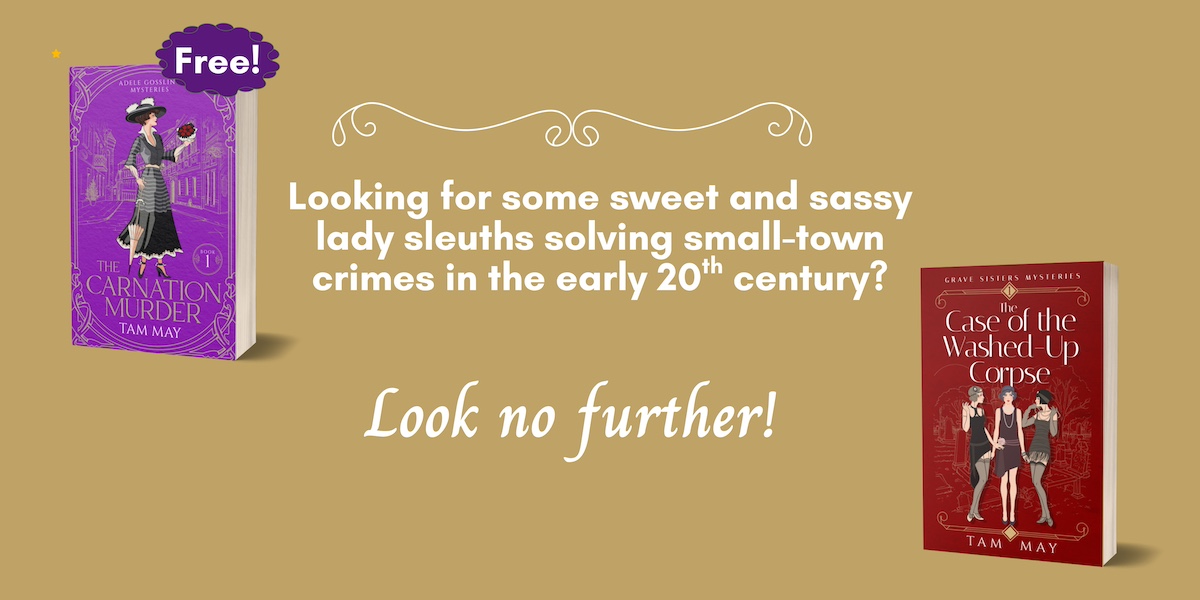
If you love fun, engaging mysteries set in the past, sign up for my newsletter to receive a free book, plus news about upcoming releases, fun facts about women’s history and mystery, and more freebies! You can sign up here

instagram
Facebooktwitterredditpinterestmail

The Separate Sphere Advantage: Lizzie Borden

Facebooktwitterredditpinterestmail

I love historical true crime and I love family crimes. That’s one of the reasons why Book 3 of my series uses one of the staples of mystery fiction: The family gathering at the family mansion for the holidays (though usually, the mansion is haunted, which isn’t the case in my book). So it’s no surprise that I, along with many other people, have always been fascinated by Lizzie Borden and the Borden family murder. 

There have been countless films, TV shows, and mini-series devoted to unraveling the Lizzie Borden case. I dug up an older movie recently, a made-for-TV film dating back to the 1970s. The Legend of Lizzie Borden (1975) stars Elizabeth Montgomery (aka, Samantha in the 1960s Bewitched series) and follows the events of the murders of Andrew and Abby Borden (Lizzie’s father and stepmother) and trial and acquittal pretty much as many sources report them. The film adds another element, though — it gives a theory (that has been accepted by many) of how the crimes were committed.

Photo Credit: (Elizabeth Montgomery (as Lizzie) and Katherine Helmond (as Emma, Lizzie’s older sister) from a scene from The Legend of Lizzie Borden, where women are picketing in front of the courthouse in support of Lizzie. 10 Feb 1975, Paramount Television: 995577823Xyn/Wikimedia Commons/PD US no notice

The film also takes a definite stance as to whether Lizzie was guilty or not. Keep in mind that, technically, the case is still unsolved. There’s also a lot of controversy over whether the evidence really shows Lizzie’s guilt. This film takes the stance that Lizzie was guilty because she had all the necessary requirements that point toward guilt: means, motive, and opportunity.

But this film brings in also another element to the motive piece I found especially interesting. It didn’t really surprise me, considering the film was made at the height of the second-wave women’s movement in the 1970s. Part of the movement’s purpose was to bring awareness to women’s oppression in the past. We already know the 19th century was not exactly a time of freedom for most women. They were dominated by the ideology of the separate spheres which kept them confined to certain areas of life (home, family, children, church), and venturing outside of that was considered transgressive. 

For a young woman of Lizzie’s social standing (small town high society), those confines were present and oppressive. She and her older sister often complained to their father about not being able to go where they liked or do what they liked and of being chained to the house. Both unmarried, they lived with their strict father and stepmother with little or no money of their own and were expected to fulfill household duties assigned to them. The film doesn’t fail to bring this out in some scenes between the family and also in one interesting scene between the prosecuting attorney (who is dead-set on convicting Lizzie) and his own wife (who, much to his chagrin, shows sympathy for Lizzie’s situation).

But could it be the separate spheres actually worked in Lizzie’s favor during the trial? This is a theory many sources put forth and the one the film supports. Since Lizzie was a well-respected, well-to-do young woman, active in her church and high society, and, of course, a woman, she couldn’t possibly have committed such horrendous crimes as to chop up her father and stepmother. Many believe Lizzie was acquitted not based on the evidence but based on who and what she was and the jury’s refusal to believe such a woman could commit murder.

If you want to know the ins and outs of the Lizzie Borden case and weigh in on your opinion on whether she did or did not commit the crimes, I invite you to join my mailing list. In honor of the release of Book 3 of my series, Death At Will, I’ll be talking all next month about the Borden case, bringing forth the details like the crime itself, the victims, the perpetrator, and the trial. But you only get access to those emails if you’re on my list.

Oh, and did I mention you also get a free book if you sign up? If you don’t want to miss out, you can join here

instagram
Facebooktwitterredditpinterestmail

The Poison With The Pretty Name: Belladonna

Facebooktwitterredditpinterestmail

As a mystery writer, I’m always looking for interesting murder weapons. I’m sure the internet gods would be shocked if they saw my browser history with all the research I’ve done on poisons for my books! 

Poison is tricky because it’s easy to give readers the sense of “been there, done that”. When you look at the immense plant life on this planet and how many species are poisonous to humans (about seven hundred out of more than fifty thousand), there just aren’t that many a mystery writer can choose from (which isn’t necessarily a bad thing if we’re talking about human life).

Now doesn’t that look like the ripest, plumpest berry you’ve ever seen?

Photo Credit: Tinieder/Depositphotos.com 

The Atropa belladonna has always fascinated me but I didn’t know its history until I started doing research on it for the third book of my series, Death At Will. It is indeed a pretty plant with a pretty name. The typical belladonna has a reddish-blackish berry similar to a cherry and is actually sweet when eaten. This is one of the things that makes it so dangerous, as it isn’t bitter like many poisonous plants. There’s no real indication it’s poisonous when you put it in your mouth.

Interestingly, the belladonna has a long history with the beauty industry (if you can call it that). In the Middle Ages, it was used as a beauty remedy. The juice of the berry made women’s cheeks redder (a sort of precursor to commercial blush powder or cream). Women sometimes rubbed the berry and leaf on their skin as a sort of skin enhancer to give it a blueish tint. Women also used a tincture of berry juice in an eyedropper to dilate their pupils. We can be thankful our ideas of beauty have changed since then!

In the nineteenth and early twentieth centuries, the belladonna was used for something else: healing. It might seem odd that poison could be considered medicine but consider we didn’t have the scientific and medical knowledge we have now about plant life nor did we have the synthetic drugs we have now so we had to rely more on Mother Nature. There was also no awareness of the long-term health effects of certain substances (think about arsenic being added to paints and wallpapers of the time). Belladonna plasters (i.e., band-aids with belladonna on them) were thought to help relieve pain and even cure tuberculosis. These plasters were sold in drug stores over the counter, an idea that makes us shudder today.

But in my book, Nin Branch, Adele’s sidekick who also happens to be a skilled herbalist, is well aware of the dangers of the Atropa belladonna. She has an argument with one of the characters about using herbs and plants responsibly or it could lead to disaster (which is pretty much what happens in the book).

Only a little over a month to go until Death At Will comes out! But you can get it here at a special discount on preorder now!

If you love fun, engaging mysteries set in the past, sign up for my newsletter to receive a free book, plus news about upcoming releases, fun facts about women’s history and mystery, and more freebies! You can sign up here

instagram
Facebooktwitterredditpinterestmail

An Ugly Page Out of California History: Eugenics and the Latino Community

Facebooktwitterredditpinterestmail

Today marks the beginning of Hispanic Heritage Month. Having lived in San Francisco’s Mission District for a time, I always loved the cultural vibe of its large Latino population. I remember taking a walk one day during Hispanic Heritage Month and seeing the parade on Mission Street with the amazing display of pride and beauty of Latino culture.

Photo Credit: One of the many amazing murals in San Francisco’s Mission District, The Mission Cultural Center for Latino Arts, San Francisco, CA, taken 23 February 2012 by Wally Gobetz: wallyg/Flickr/ CC BY NC ND 2.0

But in addition to the joy, we also have to acknowledge the shame that those of us who are not Latino share in the history of oppression and persecution. As much as I love California, it is not a state free of this shame. My intention for this blog post was to write about Latina women in the early 20th century (which I will still do at some point). But my research led me down a much darker path in California’s history: When the law of eugenics was embraced in 1909 and led to the sterilization of many Latino women and men.

Eugenics, for those who might not be familiar with the term, refers to the idea that it’s possible to create a perfect society (a super-society, per se) by taking measures and putting in laws to prevent those considered “undesirable” from creating more “undesirables.” If it sounds uncomfortably like something Hitler and the Nazi party would embrace, it’s because this is exactly what they did. To this end, one of the ways the Nazi party put this law into action was by legalizing sterilization. In the courtroom drama Judgment at Nuremberg (1961), there is a heartbreaking scene where Montgomery Clift’s character takes the stand and attests to the trauma and shame of being forced to be sterilized (you can view the scene here). This was a reality in Nazi Germany, but sadly, it was also a reality for the Latino community in California in the first part of the 20th century.

In 1909, the government passed a law legalizing sterilization of “undesirables” and California embraced this law, targeting non-white men and women, but especially its large Latino population. The theory was crime and poverty would decrease if these people were limited in procreation (sounds like something out of a bad sci-fi movie, doesn’t it?) In the first half of the century, nearly 60,000 people were sterilized in the United States, mostly in mental institutions and asylums where doctors had the decision-making power for those under their care. Many of these people were told sterilization was reversible to help persuade them to cooperate. About a third of these were in California and the majority of those were Latino men and women.

The Latino community in California began to fight back. For example, ten women in Los Angeles filed a lawsuit to gain compensation for being manipulated and coerced by hospital staff to get sterilized in 1975, though, sadly, they lost. Thankfully, the law was repealed, though not until 1979. In 2021, California set aside a budget of $7.5 million dollars exclusively to compensate families whose members had fall victim to the eugenics program. 

If you’re looking for more of a glimpse of California history (the good, the bad, and the ugly), check out my Adele Gossling Mysteries series. Book 1 and Book 2 are both out and you can preorder Book 3 (coming out on October 29) here

If you love fun, engaging mysteries set in the past, sign up for my newsletter to receive a free book, plus news about upcoming releases, fun facts about women’s history and mystery, and more freebies! You can sign up here

instagram
Facebooktwitterredditpinterestmail