What I Read: A Confessional Post

Facebooktwitterredditpinterestmail

Photo Credit: The Librarian, Guiseppe Arcimboldo, 1570, oil on canvas, Skokloster Castle, Lake Malaren, Sweden: Armbrust/Wikimedia Commons/PD US

August 9 is Book Lover’s Day. As an avid reader and writer, books are as essential to me as breathing. Books were my dreamworld, my refuge from an emotionally difficult childhood.

This Book Lover’s Day, I decided to make a confession to my readers here. I am not like many authors who read voraciously in their genre. I hardly ever read books written by contemporary authors. I don’t mean contemporary literature, which you might expect of a historical fiction author. I mean books written by contemporary authors, even historical fiction. Most of my reading is classic literature, books written fifty or one hundred years ago or more.

Part of my upbringing involved people who lived in their own fantasy worlds. That, combined with my highly sensitive nature made me developed my own dreams and fantasies. My psychological reality growing up was an isolated childhood couched in strangeness and trauma, and my way of dealing with it was to live outside of reality as much as I could with daydreams, journaling, and writing. I was never out of touch with reality (neither were my parents). I just preferred this fantasy world I had built for myself, which was my safe, happy world. A large part of that world came in books I read. Books gave me an escape into a world far more controllable than mine was.

While I was always a dreamer in love with the fantasy world of books, it wasn’t always true that I was in love with classic literature. As a teenager, I read the classics only when they were assigned at school. My leisure reading was contemporary to my time. But when I entered college, I discovered an entirely new world. As an English major, I was exposed to what is known as the “literary canon” from the birth of English literature to modern times. I read the likes of Dante, Dickens, Bronte (all three of them), and Fitzgerald, among many others, for the first time in my life, and I learned about all the important literary movements, like Romanticism and Modernism. I lived in these books, in the world of the characters, far removed from what I had ever experienced as “real life”. They took me into another time as well as another place, where I could rest my imagination. Most English students hate literary analysis and a colleague of mine once complained that learning how to analyze a literary text made her stop enjoying the books she read. But for me, literary analysis taught me to pick apart language, characters, and themes, so that I saw how relevant the passions and pains of, say, an Anna Karenina or a Daisy Miller were to me, even though my life was so different from theirs.

After college and after grad school (again, in English, so I got to read even more classic texts), I continued to read these books. My Kindle app is probably about 90% classic fiction. Some of the authors are well-known but others are more obscure, such as Gertrude Atherton, Anais Nin, and Jane Bowles. 

Last year, when I started to work on my Waxwood Series, I made an attempt to read historical fiction written by contemporary authors. I did this mainly because I wanted to see what other authors were doing and the old adage given to authors of “read in your genre” was making me feel guilty for not having sought more of these authors before. The majority of books that I started to read I would put down at some point. It had absolutely nothing to do with the authors or the quality of the books. It had to do with my personal comfort zone. Reading is so necessary to my psyche that trying to read these books, which made me feel like a fish out of water, I felt as if I were slogging through a field thick with tall wheat without a sickle. There were a few I enjoyed with, such as Anna Hope’s The Ballroom and Gregory Harris’ The Endicott Evil but the majority of these books just didn’t speak to me. I wish I could tell you why.

So after a long, hard struggle with myself after a year, I realized I am just not going to enjoy reading if it feels like a chore. So I’m now back to my beloved classics.

I’ve discovered beyond enjoyment there are also practical benefits to reading the classics. These books prepare me better for writing historical fiction because they put me inside the language and everyday life of the past as well as give me windows into the attitudes, morals, and mentality of the people living at that time. There is no denying that the rhythms of the past are very different from the present (as they should be) and it’s very difficult for historical authors writing today (myself at the top of the list) to capture those nuances. Reading classic fiction puts me in this mindset. 

These books are also a surprising source of information for me, sometimes better than all the research books I can find. For example, it’s been very difficult to find a lot of information on the aristocracy of San Francisco in the Gilded Age, a major component of the Alderdice family in my Waxwood Series. While there is a lot out there about this distinct class during this period of American history, most books and articles focus on those who lived on the East Coast, like New York City and Boston. But much of the research I’ve found seems to neglect the West Coast aristocracy in this time. However, I discovered a wonderful writer who wrote many of her books about this class in San Francisco and the Bay Area in the late nineteenth and early twentieth centuries —Gertrude Atherton. Her detailed discussions of the rise of the aristocracy in San Francisco in the mid-19th century in one of her more well-known books, The Californians, gave me a lot of information I couldn’t find anywhere else that helped shape the Alderdice family past and present. A few of her other books that tackle this society in the Gilded Age and at the turn of the century have also been very helpful to me. 

To find out more about the Waxwood Series, you can go to this page. Book 1 of the series, The Specter, is out and you can find out about that here. Book 2 is now in the works and set to be released in December of this year, so here’s the information about that.  

instagram
Facebooktwitterredditpinterestmail

American Reform and Progress at the Turn of the 20th Century

Facebooktwitterredditpinterestmail

Although this cartoon refers specifically to only one of the reforms during the Progressive Era (women’s suffragism), it is visually a great example of what was going on with all reforms during this time.

Photo Credit: Political cartoon about suffrage in the United States. Four women supporting suffrage on a steamroller crushing rocks “opposition”. Illustration in Judge, v. 72, 1917 March 17, Library of Congress Prints and Photographs Division: Unsubtlety/ Wikimedia Commons/PD 1923

I’ve talked a lot about The Gilded Age here and here because much of the Waxwood Series takes place during this time but also because the excess, glitz, and innovation of that age fascinates me. The Gilded Age led into the turn of the 20th century which proved to be as significant, if not more so, for American society, politics, and culture, than the era before it. If, according to humorists Mark Twain and Charles Dudley Warner, the last quarter of the nineteenth century in America were gilded, the start of the new century tarnished that image somewhat. We might even venture to say that the progressive reforms of the turn of the 20th century came as a sort of backlash to the decades preceding it.

Life was good in America after the financial shock wore off from Panic of 1873. America was making a name for itself on the world stage, and there was promise and hope for a better life for most people with new inventions and attitudes. But the era also had a dark side. Excess was the name of the game, especially for those who became millionaires for the first time in their lives and had no qualms about flaunting their new wealth and social standing. Social and economic divides were becoming more prevalent and consumerism and commercialism more important to American life. Wheeling and dealing in politics and business ran rampant, and things were out of control. 

Enter the Progressive Era. There had always been civic-minded reformers, largely white and middle-class, who vocalized their concern as to the consequences of Gilded Age extravagance but at the turn of the 20th century, there began more aggressive push for the government to pass laws and make reforms. While much of this was positive, these reform had hidden agendas, kinks in the road, and unanticipated consequences.

Political reforms spring to mind when we talk about the Progressive Era, of course, like government clean-ups and the fight for the vote for women. But, as my fiction involves more social and psychological history, I prefer to focus on these issues in light of turn-of-the-century reforms. 

The settlement house movement was one of the best known reforms of the era. Settlement houses conjure visions of white, middle-class women whose privileged lives and separate sphere ideals left them with little space in which to exercise their energies. One of the few outlets for nineteenth century women to show their creativity, learning, and efficiency was in aiding those in need. But settlement houses were about more than this. They set out to educate the working-class with the goal of giving them skills they needed to get better jobs and build better lives for themselves. This included not only practical subjects such as reading and writing but also more culture-oriented topics like art appreciation and music. These well-meaning women, though, were not without their hidden agenda, which was to “Americanize” the largely immigrant population which they served. Many of their teachings was firmly grounded in white middle-class values and beliefs that these women held to be true and right. There was not the awareness of or respect for other cultures that we have today. In other words, the settlement houses offered help and education in exchange for acceptance of a narrow view of American life and values that was based on a privileged population.

One of these white, middle-class beliefs was that a pretty environment bred pretty thoughts and manners. Since urbanization grew rapidly in the second half of the 19th century, these reformers abhorred the filth and neglect of city streets and slums, and lobbied for better sanitation and housing conditions. They also started the City Beautiful movement. It’s no coincidence many city parks we have today were established in the late-19th century. San Francisco’s Golden Gate Park, for example, was conceived in the 1860’s, but construction began to fall into place from the 1880’s when this movement was in its infancy. Of course, there were detractors of the movement who argued that these reforms were meant more for the eyes of the middle-class and did nothing to address some of the real issues many Americans living in the cities were facing, like shameful house conditions and lack of sanitation. 

Photo Credit: Photo of Modernist author Djuna Barnes (working as a reporter) being force fed, like so many of the suffragists of the Progressive Era with the headline for her article, “How it Feels to be Forcibly Fed”. World Magazine, 6 September 1914: Celithemis~commonswiki/Wikimedia Commons/PD US

Many of my protagonists are women, so it’s no surprise women’s suffragism plays a big role in my fiction just as it did in the Progressive Era. Suffragism started to gain ground in the late 19th century after a hiatus of sorts from mid-century reformers and, indeed, this movement plays a role in several books of the Waxwood Series. At the turn of the twentieth century, women across the country were protesting the social and psychological limitations placed on them. Many of their guerrilla tactics are now more familiar to us since the film Suffragette was released in 2015. One of the most revealed articles that gave people a glimpse of what the suffragists went through was written in 1914 by Djuna Barnes who later became an icon of Modernist literature. The article describes in detail what it was like for these women reformers, who often went on hunger strikes to protest their treatment by government authorities and police, to be force-fed, one of the hallmarks of the more radical tenants of suffragism.

While the Waxwood Series is set somewhat earlier than the height of the Progressive Era, my upcoming historical mystery series puts Adele Gossling, its main protagonist, right in the center of these reforms. As a young, outspoken woman of this era, she embraces suffragism and other reforms and, in fact, earns the stigma of being a “radical” from some of the more Victorian-minded people living in Arrojo, a small town where she resides after her father’s death. She helps the police solve crimes, many of which are form fitted to the era and expose some of its rising tensions.

To find out more about this upcoming series, you can check out this page.

To find out more about the Waxwood Series, go here. The first book of the series can be found here.

Want more fascinating information on history? Like social and psychological history and not just historical events and dates? Then sign up for my newsletter! Plus, you’ll get a free short story when you do :-). Here’s the link!

instagram
Facebooktwitterredditpinterestmail

Historical Research: A Chicken and Egg Paradox

Facebooktwitterredditpinterestmail

Photo Credit: The Bookworm, Carl Spitzweg, 1850, oil on canvas, Museum Georg Schafer, Bavaria, Germany: Iryna Harpy/Wikimedia Commons/PD Art (PD Old 70)

I’ve been working on Book 2 of the Waxwood Series this entire month very intensively with the help of Camp NaNoWriMo. This book goes into some unfamiliar territory for me in many ways. The story takes Jake (the Alderdice family son and new patriarch) through his coming-of-age and, in the process, he has to come to terms with who he will become in the shadow of family lies and half truths, as a person and as a man. Over the years, I’ve done a lot of reading and research on women in the 19th century because of my interest in women’s fiction and women’s history. Gender roles and gender politics in the past (and present) have always interested me. But until I began writing this book, I hadn’t really delved into the psychological realities of men or masculinity in the Gilded Age.

Many writers do some kind of research for their books. Even contemporary authors often need to research experiences in life of which they have no first-hand knowledge. This could be anything from what a five-year-old will and will not eat (if you’re like me, with no kids and not much exposure to young kids) to the ins and outs of a career as a registered nurse. Historical authors have the added burden of researching the past, and this isn’t always in the form of its main events (like the Civil War or the signing of the Declaration of Independence). Historical research could be as minor as how people stored meat in the 17th century (if they did at all) or as obscure as whether French women were involved in the suffragist movement in France in the 1890’s (yes, I had to research this). And research isn’t needed for just a major plot twist or main character, either. My search for women’s suffragism in France was for a comment made by a minor character about a French opera singer she had just met.

There is no hard-and-fast rule about researching for authors, and every author finds his or her own comfort zone. Some authors prefer researching everything down to the last detail before they begin that first draft. Others prefer to get the story down without worrying about historically accurate details until they finish the book, and then they go back and “fill in the blanks”. And many others do a combination of both. 

I research certain aspects of a book before I begin the first draft, usually once I have my outline down, and I know where the story and characters are going. Some details I already know from previous books I’ve written. For example, death and mourning play a small role in Tales of Actaeon (Waxwood Series, Book 2). I researched rather extensively these very specific and elaborate practices in the 19th century when I wrote Book 1, The Specter. So there was much I knew already before I started Tales. Other details I know little or nothing about but make a great impact on the book, so I prefer to research them before I start. A group of college-aged young men appear in Tales, and I knew very little about college life in the Gilded Age, so I did some research before I started the first draft.

But even with an outline, my first drafts often take on a life of their own. It’s not uncommon for me to be working on the draft and then realize the direction in which I’ve been going isn’t giving me what I want for the book. I’ll mull over this and at some point, a better vision of where the book needs to go will appear to me (usually at about 3 o’clock in the morning…), and I’ll find myself making new chapter notes and sometimes rewriting previous key chapters or scenes I need in order to continue with the story. 

In this way, research will take an unpredictable path. There are many small details I find myself needing to know as I write the story because they come up unexpectedly in the creative process. The French suffragist was one of these in Tales. Another one was burlesque houses. As I was writing, an idea for a scene with the college-aged boys I mention above taking Jake to a burlesque house in another town. I had no idea what sort of atmosphere there would be there, what the shows would be like, what the performance schedule would be like, and what sort of costumes or dress the performers would have. I found myself taking all day to research these things for the chapter I had to write so I could feel confident in writing with the emotions of the scene and relate it to Jake’s overall quest, the main focus of the book.

So doing research can be like the old paradox of the chicken and the egg — do you research first and then write or can you only research once you start writing because you don’t know what you’ll be researching until you write? For me, it’s a combination of both. 

To read more about Tales of Actaeon, check out this page.

If you’d like to purchase a copy of Book 1 of the Waxwood Series, The Specter, you can do that here.

And for more about the Waxwood series, I have a page on my website here.    

instagram
Facebooktwitterredditpinterestmail

A Place for Everyone and Everyone in Place: The Separate Spheres

Facebooktwitterredditpinterestmail


We now have a whole new generation (Generation Z) who are continuing the fight for women’s rights that started in the early 19th century. Some studies show more than half of Gen Z women consider themselves feminists and are deeply supportive of women’s rights. But with this also comes the backlash. The same studies point to many Gen Z men feeling feminism is either outdated or so extreme that it’s become reverse sexism.


I became a feminist in college in the 1990s when I began studying literature and women’s fiction. My parents are from a very patriarchal culture that supports the idea of male rule, and women’s purpose in life is serving everyone around them — parents, husband, children, community. Feminism was my way of breaking free from that. 


I think this is why so many of my women characters embody independence and fight not only for their own rights but the rights of others during time periods when, like my parents’ culture, patriarchy ruled. From Adele Gossling (who admits she seeks justice for the dead as well as the living) to the Grave Sisters (for whom the newly ratified 19th Amendment permeates their thinking and beliefs). Even my Gilded Age family saga, the Waxwood Series, traces the awakening of Vivian Alderdice, a wealthy debutante, as she discovers she wants much more than what the rigid rules of Nob Hill society dictate for a young woman.

Photo Credit: OpenClipartVectors/Pixabay/CC0 1.0


To put it as simply as I can, the term “separate spheres” embraces the idea that men and women each have a very specific “place” in the world. I use the word “place” here a bit ironically, because confinement in the physical, emotional, and spiritual sense has been one of the greatest battles women have had to fight. In the 19th century, philosophers, religious leaders, and intellectuals believed men were born for the public sphere, which includes politics, business, and law, and women were destined for the private sphere, such as home, family, and community. In other words, men’s purpose in life was to go out and make money, make laws, and run the world, and women’s purpose was to take care of everyone. This is a very simplified definition of the separate spheres, but it gives you an idea of how the spaces occupied by women and men, for that matter, were rigidly defined and very limited.


When we look at the separate spheres more closely, we see they not only outlined what women (and men) could do and be, but what they couldn’t do or be. Women were expected to stay out of medicine, for example, because medicine came under the heading of the public sphere. Similarly, the idea of the stay-at-home dad was all but inconceivable since the home was women’s domain. Each was allowed to reap the rewards of the other sphere. For women, this meant financial support and social respect (since an unmarried woman was considered a castoff). For men, it meant a comfortable home and loving family and a small world where he was always (or most of the time) the master. There were exceptions, of course, but in general, this was the status quo.


In the mid-nineteenth century, business, politics, and economics were developing at a rapid pace. Jobs were opening up in the cities and people left behind the slower, simpler life they had known in the rural towns. At the same time, in the minds of many people, these spheres were full of big, bad monsters capable of luring people, especially young people, to evil, greed and sin, soiling their minds, souls, and bodies. 


Because of this, home and family were idealized as the symbol of purity, comfort and refuge (which is one reason why Victorian homes were so ornate and overstuffed – a world apart from the public sphere). And who better to take care of them than infantilized, unsoiled women? 


This thinking produced a third ideology: the Angel in the House. This was the eyelash-fluttering, childlike wife and mother who spent her days cleaning, cooking, attending to children, and engaging in religious and charitable work. This ideal of the Angel in the House had existed for a long time, but it took on a more important role in the 19th century. Many saw the separate spheres as necessary to modern life. Women had to be protected because they were the protectors of morals and values. Is it any wonder author Virginia Woolf once wrote how, for a woman to get any significant (non-domestic) work done, she had to kill the Angel in the House?

The ideal of the angel in the house actually derived from a popular, book-length poem written in 1854 by Coventry Patmore, and the model for this ideal was Patmore’s wife, pictured above.

Photo Credit: Portrait of Mrs. Coventry Patmore, John Everett Millais, 1851, oil on panel, The Fitzwilliam Museum, Cambridge: PKM/Wikimedia Commons/PD Art (PD old 100)


Patemore’s poem might sound like a gross stereotype, but it illustrates the whole idea behind the separate spheres. It was, after all an ideology – the way people wished things would be or believed they should be. 


The problem with the Angel in the House and the separate spheres was that they created a model of womanhood most women found impossible to live up to, and many found unsatisfying. That ideal would come back to haunt society a hundred years later when Betty Friedan published her seminal work, The Feminine Mystique, and labeled this same model of womanhood, somewhat modified in the post-World War II generation, as  “The Problem That Has No Name”


When a woman’s temperament did not fit the sphere to which she was confined, illness ensued. A famous example of this is the Charlotte Perkins Gilman story “The Yellow Wallpaper”, which I mention here


Welter refers to the cult of true womanhood, but it should really be called the myth of true womanhood. Ideologies take on the proportions of myths because these narratives cannot be realized as anything but legends.


Thankfully, the idea of the separate spheres began to crumble in the 20th century when women thrust their way into the public sphere through progressive movements like suffragism. The New Woman also emerged during this time, completely turning the Angel in the House on her ear. In the 1920s, the New Woman became the flapper, an even more revolutionary type that broke all the rules the Angel in the House had set.


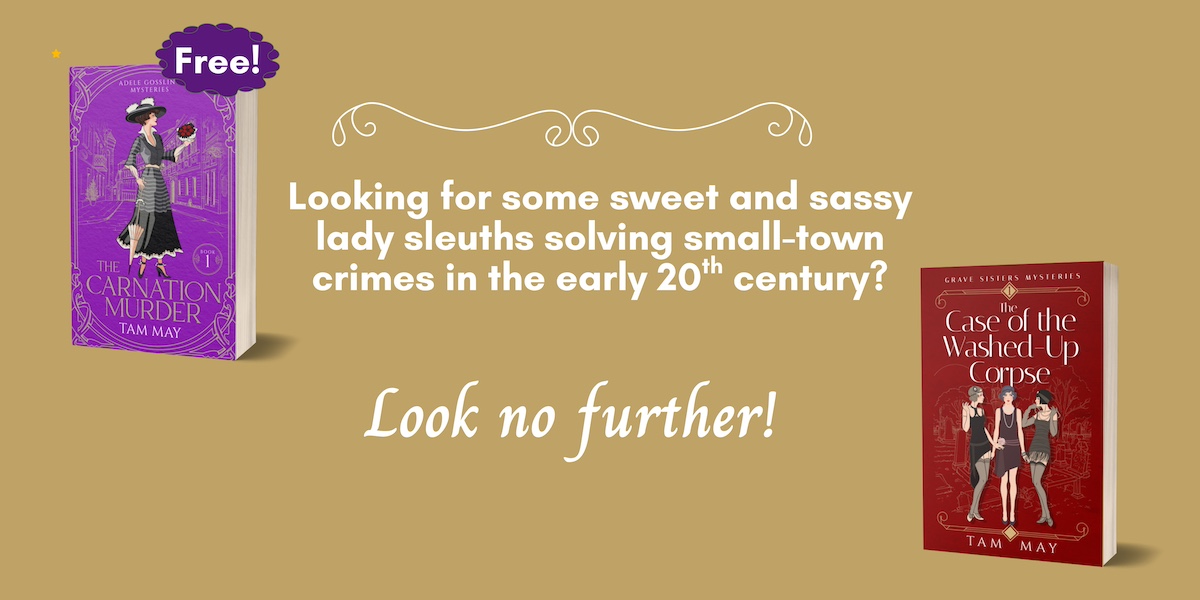
If you’re looking for books about women breaking out of the separate spheres, there’s no better place to start than mine. If you like historical mysteries, you can begin with The Carnation Murder, the first book of my Adele Gossling Mysteries. The book is free on all bookstore sites here. For some flapper fun, check out the first book of my Grave Sisters Mysteries here. If you’re more into women’s fiction, I have a family saga set in the Gilded Age called the Waxwood Series. You can check out the first book of that 4-book series, The Specter, for just 99¢ at all bookstores by going to this link

instagram
Facebooktwitterredditpinterestmail

A Prequel Short Story: The Rose Debutante

Facebooktwitterredditpinterestmail

Photo Credit: Painting of a pink rose with purple background, uploaded 8 August 2017: G4889166/Pixabay/Pixabay license

A few months ago, I announced to my readers group and author page that I would be updating the free gift I was offering for my newsletter subscribers (present and future). I would be giving a short story related to my Waxwood Series. The story gives some insights into the Alderdice family and, in particular, the character of Vivian Alderdice, the unofficial protagonist of the series.

I call the story a prequel, which it is on one level. Dictionary.com defines the word prequel as “a literary, dramatic, or filmic work that prefigures a later work, as by portraying the same characters at a younger age” (“Prequel”, 2010). I’m not entirely satisfied with this definition, as it leaves out what I think is one of the most important elements of prequels — story (or series) importance. Authors and filmmakers create prequels for a reason. A prequel usually contains some keys to a richer understanding of the story or the characters, a sort of “this is how they got here” element in a separate work. This, then, gives readers a reason to read the story outside of the fact that they (hopefully) loved the characters enough to want to know about their lives before the story/series began.

This is why I wrote the short story “The Rose Debutante”. As I was writing The Specter, Book 1 of my Waxwood Series, I realized one of the keys to understanding both Vivian and her grandmother Penelope Alderdice (whose role in the story and series I wrote about here) was to understand their position as 19th century debutantes. I could have chosen to discuss the debutante in a factual blog post (and probably will do so sometime in the future), but I started getting more intrigued by the psychological aspects of this role thrust upon Vivian a little before the start of Book 1. I wanted specifically to explore what that role meant for her in light of Gilded Age thinking about women, money, and marriage.

In Book 1, there is reference to one of the most salient events in a 19th century wealthy young woman’s life — her debutante “coming out” ball. Researching this, I was fascinated by the undercurrents of this seemingly gay event, when a girl stopped being a girl in the eyes of society and became a woman. I wanted to explore the question, “What did that really mean for  her, beyond the obvious (putting a young woman into the marriage market?)” I wanted to examine Vivian’s psychological reality as it related to this one very important event in her life that becomes the pinnacle of her thoughts and actions in the evolution of the Waxwood Series.

So it was natural for me to write a story about Vivian’s coming out ball. The story isn’t only a glimpse inside the excitement and lavishness of this event in wealthy Gilded Age society, but it’s also about the apprehensions, the expectations, and the fears encountered by a young woman who, with her hair up and in her first pair of high heels, is no longer seen as a girl but as a young woman with a role to play in her very structured and class-conscious society. For Vivian, perhaps, more than for many young women who took their coming out ball as a matter of course, the event brings the epiphany that her days of psychological liberty are over and now begins the straight and narrow path of womanhood as experienced by so many 19th century women of all classes. The story also gives readers a foundation on which Vivian’s later epiphanies, explorations of the past, and discoveries of the future are based in the series.

This is the first time I’ve written any kind of prequel to any of my stories, and I discovered in the process not only a way to let readers know about Vivian with more psychological depth but the beauty of making connections. In this story there appears several characters who later make a more standing appearance in Book 2 of my series, Tales of Actaeon.

To receive a copy of the short story The Rose Debutante, you must either already be signed up for my newsletter or you can sign up for it here.

To find out more about The Specter, the first book in the series, and get your copy, check out the links on this page.

And you can find out more about the Waxwood Series here.  

Works Cited

Prequel, 2010. Retrieved from https://www.dictionary.com/

instagram
Facebooktwitterredditpinterestmail