


We now have a whole new generation (Generation Z) who are continuing the fight for women’s rights that started in the early 19th century. Some studies show more than half of Gen Z women consider themselves feminists and are deeply supportive of women’s rights. But with this also comes the backlash. The same studies point to many Gen Z men feeling feminism is either outdated or so extreme that it’s become reverse sexism.
I became a feminist in college in the 1990s when I began studying literature and women’s fiction. My parents are from a very patriarchal culture that supports the idea of male rule, and women’s purpose in life is serving everyone around them — parents, husband, children, community. Feminism was my way of breaking free from that.
I think this is why so many of my women characters embody independence and fight not only for their own rights but the rights of others during time periods when, like my parents’ culture, patriarchy ruled. From Adele Gossling (who admits she seeks justice for the dead as well as the living) to the Grave Sisters (for whom the newly ratified 19th Amendment permeates their thinking and beliefs). Even my Gilded Age family saga, the Waxwood Series, traces the awakening of Vivian Alderdice, a wealthy debutante, as she discovers she wants much more than what the rigid rules of Nob Hill society dictate for a young woman.

Photo Credit: OpenClipartVectors/Pixabay/CC0 1.0
To put it as simply as I can, the term “separate spheres” embraces the idea that men and women each have a very specific “place” in the world. I use the word “place” here a bit ironically, because confinement in the physical, emotional, and spiritual sense has been one of the greatest battles women have had to fight. In the 19th century, philosophers, religious leaders, and intellectuals believed men were born for the public sphere, which includes politics, business, and law, and women were destined for the private sphere, such as home, family, and community. In other words, men’s purpose in life was to go out and make money, make laws, and run the world, and women’s purpose was to take care of everyone. This is a very simplified definition of the separate spheres, but it gives you an idea of how the spaces occupied by women and men, for that matter, were rigidly defined and very limited.
When we look at the separate spheres more closely, we see they not only outlined what women (and men) could do and be, but what they couldn’t do or be. Women were expected to stay out of medicine, for example, because medicine came under the heading of the public sphere. Similarly, the idea of the stay-at-home dad was all but inconceivable since the home was women’s domain. Each was allowed to reap the rewards of the other sphere. For women, this meant financial support and social respect (since an unmarried woman was considered a castoff). For men, it meant a comfortable home and loving family and a small world where he was always (or most of the time) the master. There were exceptions, of course, but in general, this was the status quo.
In the mid-nineteenth century, business, politics, and economics were developing at a rapid pace. Jobs were opening up in the cities and people left behind the slower, simpler life they had known in the rural towns. At the same time, in the minds of many people, these spheres were full of big, bad monsters capable of luring people, especially young people, to evil, greed and sin, soiling their minds, souls, and bodies.
Because of this, home and family were idealized as the symbol of purity, comfort and refuge (which is one reason why Victorian homes were so ornate and overstuffed – a world apart from the public sphere). And who better to take care of them than infantilized, unsoiled women?
This thinking produced a third ideology: the Angel in the House. This was the eyelash-fluttering, childlike wife and mother who spent her days cleaning, cooking, attending to children, and engaging in religious and charitable work. This ideal of the Angel in the House had existed for a long time, but it took on a more important role in the 19th century. Many saw the separate spheres as necessary to modern life. Women had to be protected because they were the protectors of morals and values. Is it any wonder author Virginia Woolf once wrote how, for a woman to get any significant (non-domestic) work done, she had to kill the Angel in the House?

The ideal of the angel in the house actually derived from a popular, book-length poem written in 1854 by Coventry Patmore, and the model for this ideal was Patmore’s wife, pictured above.
Photo Credit: Portrait of Mrs. Coventry Patmore, John Everett Millais, 1851, oil on panel, The Fitzwilliam Museum, Cambridge: PKM/Wikimedia Commons/PD Art (PD old 100)
Patemore’s poem might sound like a gross stereotype, but it illustrates the whole idea behind the separate spheres. It was, after all an ideology – the way people wished things would be or believed they should be.
The problem with the Angel in the House and the separate spheres was that they created a model of womanhood most women found impossible to live up to, and many found unsatisfying. That ideal would come back to haunt society a hundred years later when Betty Friedan published her seminal work, The Feminine Mystique, and labeled this same model of womanhood, somewhat modified in the post-World War II generation, as “The Problem That Has No Name”.
When a woman’s temperament did not fit the sphere to which she was confined, illness ensued. A famous example of this is the Charlotte Perkins Gilman story “The Yellow Wallpaper”, which I mention here.
Welter refers to the cult of true womanhood, but it should really be called the myth of true womanhood. Ideologies take on the proportions of myths because these narratives cannot be realized as anything but legends.
Thankfully, the idea of the separate spheres began to crumble in the 20th century when women thrust their way into the public sphere through progressive movements like suffragism. The New Woman also emerged during this time, completely turning the Angel in the House on her ear. In the 1920s, the New Woman became the flapper, an even more revolutionary type that broke all the rules the Angel in the House had set.
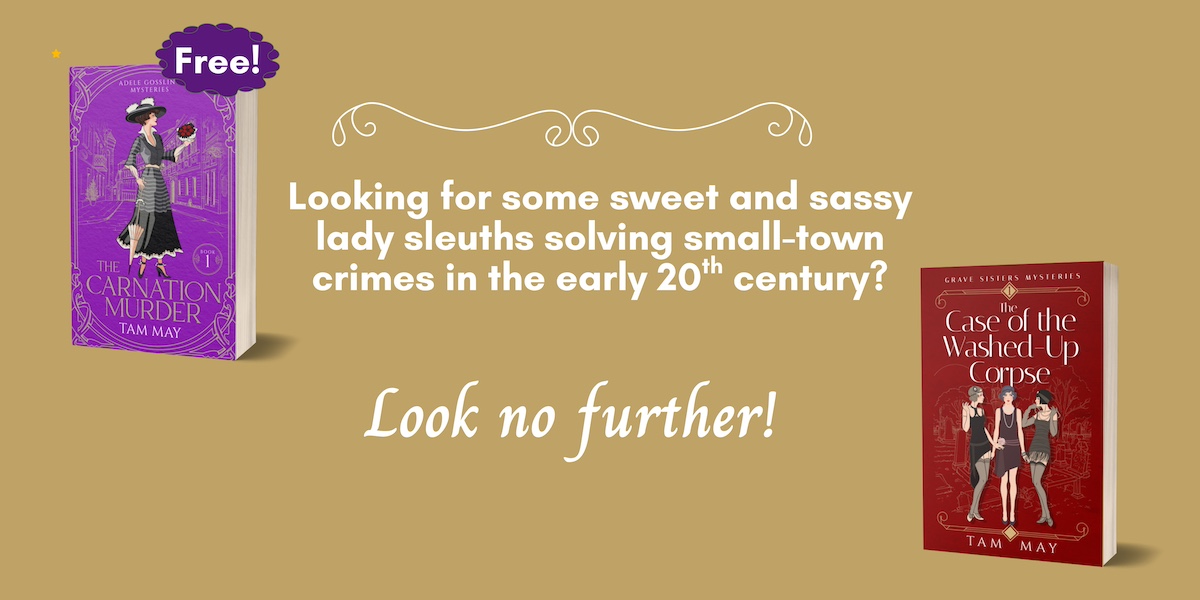
If you’re looking for books about women breaking out of the separate spheres, there’s no better place to start than mine. If you like historical mysteries, you can begin with The Carnation Murder, the first book of my Adele Gossling Mysteries. The book is free on all bookstore sites here. For some flapper fun, check out the first book of my Grave Sisters Mysteries here. If you’re more into women’s fiction, I have a family saga set in the Gilded Age called the Waxwood Series. You can check out the first book of that 4-book series, The Specter, for just 99¢ at all bookstores by going to this link.

