It’s Here… The Waxwood Series Relaunch!

Facebooktwitterredditpinterestmail

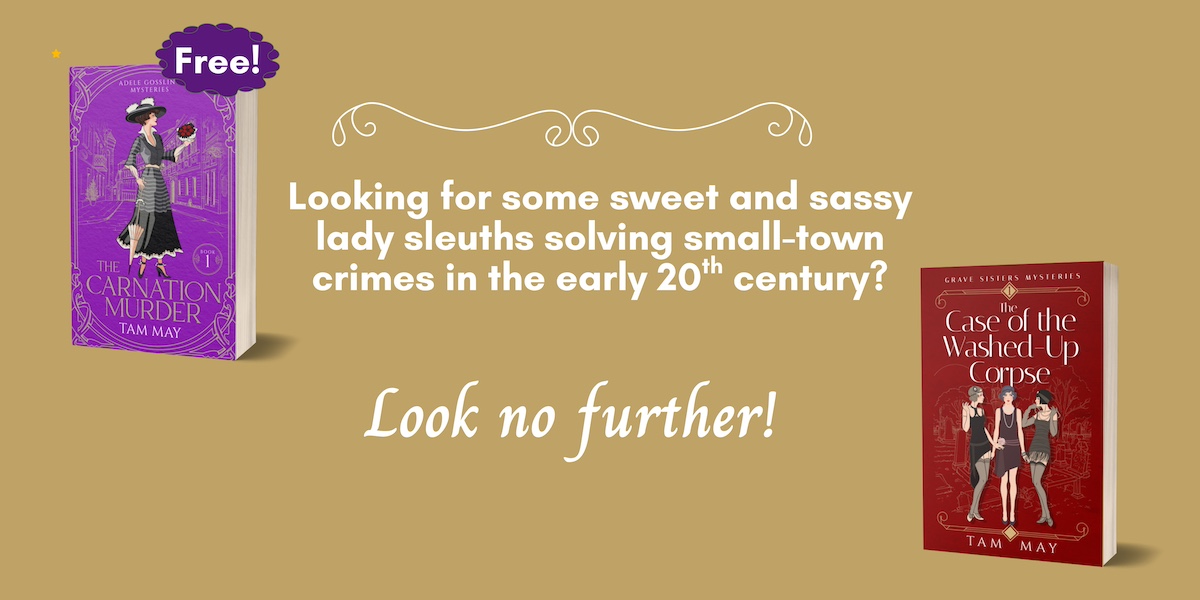
All covers by Essi/100 Covers

Series: Waxwood Series, Book 4

Author: Tam May

Genres: Historical Women’s Fiction/Family Saga

Relaunch Date: November 1, 2021

How many myths and half-truths does it take to destroy a family?

Vivian, the daughter and “Dagger Girl”, whose refusal to leave family secrets untold leads her down a dark path to a better future.

Jake, the son, and heir, whose search for a father figure leads him down the dark path of sin and redemption.

Larissa, the family matriarch, whose obsession with Nob Hill’s rigid social codes hides the shameful secrets of her past.

Come dive into this family saga set during one of America’s Gilded Age today. Book 1 is only 99¢!

Click the following links below to get the full details and all the buy links for each book:

The Specter (Waxwood Series: Book 1): https://tammayauthor.com/books-2/waxwood-series/the-specter-waxwood-series-book-1

False Fathers (Waxwood Series: Book 2)https://tammayauthor.com/books-2/waxwood-series/false-fathers-waxwood-series-book-2

Pathfinding Women (Waxwood Series: Book 3)https://tammayauthor.com/books-2/waxwood-series/pathfinding-women-waxwood-series-book-3

Dandelions (Waxwood Series: Book 4): https://tammayauthor.com/books-2/waxwood-series/dandelionswaxwood-series-book-4

Want to read an excerpt from each book? There’s a group for that! Join Tam’s Dreamers and you’ll get access to extra files, including special excerpts and other goodies. Plus, fun stuff about the history you never knew (like Victorian-era pudding recipes and vintage Halloween stickers!). You can request to join by clicking the button below.

About the Author

As soon as Tam May started writing at the age of fourteen, writing became her voice. She writes historical women’s fiction and historical mysteries. She loves to take readers into the nooks and crannies of the past, and she wants to inspire readers with her resilient and autonomous female characters. Most of her fiction is set in and around the San Francisco Bay Area because she fell in love with the city and found her independence and writing voice when she lived there in the 1990s. 

Her book Lessons From My Mother’s Life debuted at #1 in its category on Amazon. She’s also published a Gilded age family saga set among San Francisco’s Nob Hill elite titled the Waxwood Series which follows the Alderdices as they discover their place amidst revolutionary changes and shifting values in the last decade of the 19th century.

Tam’s current project is a historical mystery series titled The Paper Chase Mysteries. The series takes place in Northern California at the turn of the 20th century and features amateur sleuth and epistolary expert Adele Gossling, a progressive and independent young woman whose talent for solving crimes comes into direct conflict with her new community apt to prefer the previous era’s angel in the house to the current century’s New Woman. 

Tam lives in Texas but calls San Francisco and the Bay Area “home”. When she’s not writing, she’s reading classic literature, watching classic films, cross-stitching, or cooking yummy vegetarian dishes. 

Is the life of a Gilded Age debutante all parties and flirtations? Read “The Rose Debutante” to find out! It’s FREE! Plus, you’ll get to know about life in the past and about the resilient women the history books forgot. And how about fun historical facts, great deals on historical fiction books, and a cool monthly freebie thrown in just because? Here’s where you can sign up.

Social Media Links

Facebook: https://www.facebook.com/tammayauthor/

Instragram: https://www.instagram.com/tammayauthor/

Goodreads Author Page: https://www.goodreads.com/author/show/16111197.Tam_May

Amazon Author Page: https://www.amazon.com/Tam-May/e/B01N7BQZ9Y/ 

BookBub Author Page: https://www.bookbub.com/authors/tam-may

To celebrate the relaunch of the Waxwood Series, I’m doing a big giveaway where you could win a grand prize that includes paperbacks of all four books in the series, swag, and chocolate. And there are a few smaller prizes on offer as well. To enter, click the button below.

instagram
Facebooktwitterredditpinterestmail

Waxwood Series Relaunch Giveaway!!!

Facebooktwitterredditpinterestmail
instagram
Facebooktwitterredditpinterestmail

Gilded Age Technical Innovations: The Automobile

Facebooktwitterredditpinterestmail

Photo Credit: Henry Ford’s first car, a Quadricycle Runabout, 1896, Midcoast Studios, Henry Ford Museum: The Henry Ford/Flickr/CC BY NC ND 2.0

We might see the late 20th Century onward as the era of phenomenal technical innovation (think: personal computer, wifi, and the internet), but it was really the Gilded Age that started it. As I mentioned in this blog post, the Gilded Age (roughly the last quarter of the 19th century) moved us into the modern era where the 20th (and 21st) centuries took over. Everything was getting a make-over then, including fashion, business, and politics. Technology was no exception.

Although cars didn’t really become popular until they became affordable (when Henry Ford released the Model T in 1908), they’re still probably one of the most earth-shattering of all the technical inventions created in the Gilded Age. When exactly the first car was manufactured is a matter of dispute, though people generally cite Carl Benz (of Mercedes-Benz fame) as being the first to come out with a three-wheeled automobile that ran on gasoline. The contraption was pretty modest, looking almost like a three-wheel bicycle with a fancy leather seat. The car was created in 1879 but didn’t get its first run until 1886. 

The idea behind the early automobile can be found really in the word itself (which didn’t come about until 1897). The car was all about the ability to go where you wanted in a vehicle that ran on its own (as opposed to having an animal pull it). This is one reason why early automobiles were first referred to as “horseless carriages”. They were thought of as carriages just like any other (and many early 19th century ones looked more like carriages and wagons than the cars we know today) except they didn’t need a horse to pull them.

Interestingly, early automobiles didn’t necessarily run on gasoline. Many ran on steam power (using a smilier principle as the steam engine, another new technological innovation of the 19th century) and some even ran on electricity (hello, hybrid). In fact, early electric cars were often marketed to women (yes, women did drive cars in the early 20th century, including author Edith Wharton and society etiquette queen, Emily Post) because they were elegant and easy to operate. 

One of my favorite films is Orson Welles’ The Magnificent Ambersons (1942). The movie is based on a 1918 book (but takes place earlier) and documents the downfall of a wealthy Midwestern family. The shift from carriages to automobiles figures prominently in the story. Eugene Morgan, an old beau of Amberson matriarch Isabella, is a car manufacturer at a time when they were considered, in the words of Isabella’s son, a “useless nuisance”. In the film, there is a discussion of the automobile at the dinner table one night. The discussion brings out some of the fears people had about cars then, such as the value of exclusive neighborhood properties going down once cars allowed people to travel longer distances. Interestingly, the biggest “nuisance” we would consider with cars today (accidents) isn’t even mentioned, probably because the speed limit in the early 20th century was less than 20 miles an hour outside city limits. The philosophical speech Morgan delivers about the automobile is that, like it or not, no one could stop this technological innovation from replacing the horse and buggy and, of course, this prediction proved right. By the 1910s, cars outnumbered horse-drawn carriages in many cities across America.

Photo Credit: Baker Electric Coupe 1908, taken by Lars-Göran Lindgren: Lglswe/Wikimedia Commons/CC BY SA 3.0 

The Alderdices are, like the Ambersons, stuck in the past and are reluctant to embrace the new technologies that were already coming their way in the last decade of the 19th century. In Book 2, Jake and Vivian is introduced to a custom-made car belonging to Stevens called the Brata. The name is fictional but the car itself was inspired by a real electric car manufactured by the Baker Motor Vehicle Company in 1909. The car attracted me and fit Stevens’ character, like the kind of car he would really own, so I adopted it, although the series takes place some ten years earlier. Interestingly, Jay Leno, a classic car enthusiast, restored one of the Baker Electric 1909 automobiles and you can see him driving it here

Incidentally, cars also play a role in my upcoming historical cozy mystery series, The Paper Chase Mysteries. The protagonist and amateur sleuth, Adele Gossling, an up-and-coming New Woman, symbolically and literally invades the backward-thinking town of Arrojo in Book 1 when she shows up in a Beaton Roundabout (another fictional name for an automobile but inspired by the Stearns Steam Surrey, manufactured by the Stearns Steam Carriage Company in Syracuse, New York in 1902). If you’re curious, you can find a photo of the car here

The Waxwood Series is about to get a complete makeover! All four books will be getting new covers and new blurbs in November. You can find out more about the series here

Come join me for a peek into the corners of history! Curious about those nooks and crannies you can’t find in the history books? Are you more a people lover than a date or event lover when it comes to history? Then you’ll love the Resilient History Newsletter! Plus, when you sign up, you’ll get a prequel to my Waxwood Series for free! Here’s where you can sign up.

instagram
Facebooktwitterredditpinterestmail

The Great Rebellion: The Seneca Falls Convention of 1848

Facebooktwitterredditpinterestmail

Although this photo is from a later period in history, it nonetheless depicts one of the objections to women’s rights — that the “natural order of things” in terms of gender roles would be reversed and men would have to do the housework while women went out into the political arena.

Photo Credit: A woman wearing knickers (“pants”) and smoking a cigarette while her husband does the washing, 1901, Underwood & Underwood: P. S. Burton/Wikimedia Commons/PD Underwood

Today marks the anniversary of the start of what Elizabeth Cady Stanton called the greatest rebellion of the 19th century: The Seneca Falls Convention. 

The convention grew out of a moment of oppression. The World Anti-Slavery Convention took place in London in 1840, and Elizabeth Cady Stanton and Lucretia Mott, met there for the first time. Both were denied entry into the convention because organizers decided to bar all women from attending. From this was born the idea in Cady Stanton and Mott’s minds to organize a convention closer to home to discuss women’s rights.

This event took place in Seneca Falls, New York on the weekend of July 19th and 20th in 1848 and became the first organized political gathering for women. You may recall I wrote here about the idea of suffragism (the right to vote). But was the convention really focused on women’s suffragism? Yes and no. Certainly, the right to vote was on the agenda, but as I mentioned in my blog post above, it wasn’t considered of the utmost importance, though it would be later on in the movement. What was high on the agenda was the idea that women were equal to men. You might recall from my discussion of the separate spheres that it was generally thought women were weaker than men emotionally and mentally, and therefore, their confinement to the private sphere was justified. So the idea that women were equal in every way was, as Cady Stanton declared, revolutionary indeed. 

To this end, the attendees of the convention (there were 300 of them) came up with a Declaration of Sentiments. The name, of course, suggests the Declaration of Independence, and this is no surprise, as the wording stems directly from that document. You can read the entire Declaration of Sentiments and see the names of some of the movers and shakers of the suffragist and abolitionist movements (including Frederick Douglass) who signed the declaration here.

Reactions to the convention were mixed. Some reporters and editors considered the idea of women meeting to talk about their rights as nothing short of lunacy. Others were afraid it would lead to a gender role reversal (as the cartoon above shows). Still others, like the famous Horace Greenly of the New York Tribune, begrudgingly admitted suffragists might be on to something when they insist women were created equal to men in the eyes of God and humanity.

Although the convention wasn’t perfect (it was haphazardly organized and attended mainly by locals,) it gave rise to the idea that women’s rights were worth putting on the political agenda of the 19th century. Also, like the publication of Betty Friedan’s The Feminine Mystique nearly 120 years later (which I talk about here,) the convention triggered a movement that followed into the 20th century, creating not just one but several waves and generations of fighters for women’s rights. 

I talk about women’s rights in the late 19th century a lot in my Waxwood Series, and it also will come up in my upcoming historical cozy mystery series, The Paper Chase Mysteries. Book 3 of the Waxwood Series, Pathfinding Women is especially focused on the suffragist movement and some of the conflicts within that movement (though more in a personal than political sense).        

Want to explore the nooks and crannies of history that aren’t in the history books? Like social and psychological history and not just historical events? Want in on exclusive sneak peeks, giveaways, and surveys? Then sign up for my newsletter! You’ll get a free short story when you do.

instagram
Facebooktwitterredditpinterestmail

Summer Vacation in the 19th Century

Facebooktwitterredditpinterestmail

Photo Credit: Terrasse à Sainte-Adresse, Claude Monet, 1866-1867, oil on canvas, Metropolitan Museum of Art, New York, NY: Crisco 1492/Wikimedia Common/PD old 80

This Sunday is the official start of summer. Much of my historical family saga, the Waxwood Series, takes place during the summer months. For us 21st century people, summer means hot weather, swimming pools, and beaches. It’s about fun, leisure, and rest. 

The Victorians, however, had a different take on summer. In the 19th century, only the privileged (like my Alderdice family) could afford to take a summer vacation. Middle-class and working-class people did not take time off in the summer or go on vacation. Why? 

First, there was a philosophical issue involved. Tension existed between work and play in America at that time. Doctors and ministers and other authorities were suspicious of vacations, believing they led people to vice. There was also a very practical reason: Most people just couldn’t afford to take time off and go somewhere for the summer (no paid time off for vacations in those days).

What changed? Our awareness that being the constant workhorse was more unhealthy than the sort of vices vacation destinations could offer. Also, the rising middle class in the Gilded Age could finally afford to a week or two off from work during the summer for some fun and leisure. And, too, as with much of American life in the Gilded Age, there was the question of commerce. The travel and hospitality industries (like hotels and restaurants) quickly realized they could make a lot of money by encouraging Americans to take time off to enjoy the summer and play.

In my series, when summer comes, the Alderdice family vacation in the resort town called Waxwood. Resort life was growing in the Gilded Age among the wealthy and upper-middle class. These wealthy people took their summer vacations very seriously, spending months lounging in resorts, meeting new people, and participating in all sorts of activities and events. You can find out more about my series on this page

Ready to dive into my Gilded Age family saga? Now is a perfect time! Book 1, The Specter, has been updated and revised and is now at 99¢. You can get it here

And if you really want to know what it was like to spend a summer in a resort with the wealthy, you’ll want to read Book 2 of the series, False Fathers, which has also recently been updated and revised.

instagram
Facebooktwitterredditpinterestmail