Tragedy and Survival: The Ohlone of California

Facebooktwitterredditpinterestmail

Today is Columbus Day, a day many of us in America learned about in school. When I learned about it (I won’t tell you how long ago that was…) teachers only talked about Columbus but not about the people already inhabiting America or about their suffering and their strength. Luckily, we live in much more enlightened times and kids today are also taught that this is also Indigenous Peoples’ Day, a celebration not just of Columbus but also of the Indigenous people who were already on American soil.

Photo Credit: A modern Ohlone family in traditional Ohlone dress, taken 21 February 2-15 and displayed in the Palace of Fine Arts in San Francisco, CA: Noahedits/Wikimedia Commons/CC BY 2.0

I came across the history of the Ohlone of California after doing research for Book 5 of the Adele Gossling Mysteries (coming out next year). I was interested in Native American tribes that settled specifically in the Bay Area and the Ohlone interested me. Calling the Ohlone a “tribe” is actually incorrect. These people indigenous to the Bay Area actually made up at least fifty tribes with different languages, practices, and cultures. The Ohlone population decreased with rapidity during the years Mexico owned California for several reasons, including infant mortality, plagues, and persecution. By the mid-nineteenth century, the Ohlone population had been reduced by almost ninety percent. 

That was also the time when the already dwindling Ohlone population suffered more tragedies at the hands of the new American government, as California became a state in 1850. Massacres took away more of their people and the government took away much of the land that had been theirs. By the turn of the century, there were less than fifty Ohlone people left and the majority of them lived more of a Mexican than an Ohlone life.

We can be thankful that today, the diverse tribes of the Ohlone have been recognized and the culture of these tribes revitalized and celebrated. 

So happy Indigenous Peoples’ Day!

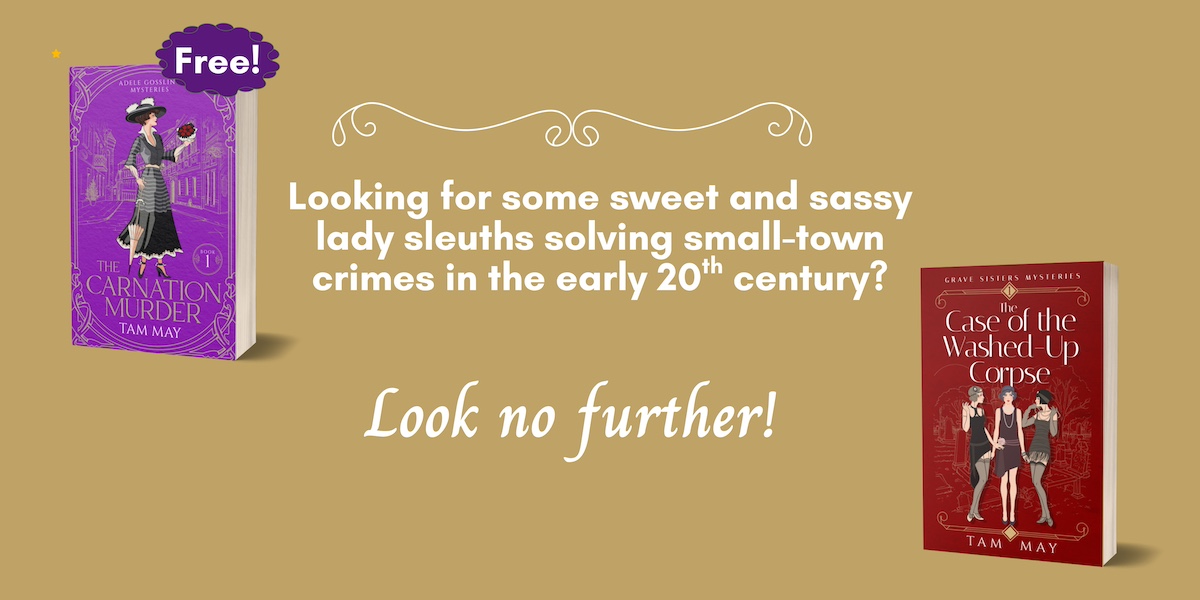
If you love fun, engaging mysteries set in the past, sign up for my newsletter to receive a free book, plus news about upcoming releases, fun facts about women’s history and mystery, and more freebies! You can sign up here

instagram
Facebooktwitterredditpinterestmail

The Separate Sphere Advantage: Lizzie Borden

Facebooktwitterredditpinterestmail

I love historical true crime and I love family crimes. That’s one of the reasons why Book 3 of my series uses one of the staples of mystery fiction: The family gathering at the family mansion for the holidays (though usually, the mansion is haunted, which isn’t the case in my book). So it’s no surprise that I, along with many other people, have always been fascinated by Lizzie Borden and the Borden family murder. 

There have been countless films, TV shows, and mini-series devoted to unraveling the Lizzie Borden case. I dug up an older movie recently, a made-for-TV film dating back to the 1970s. The Legend of Lizzie Borden (1975) stars Elizabeth Montgomery (aka, Samantha in the 1960s Bewitched series) and follows the events of the murders of Andrew and Abby Borden (Lizzie’s father and stepmother) and trial and acquittal pretty much as many sources report them. The film adds another element, though — it gives a theory (that has been accepted by many) of how the crimes were committed.

Photo Credit: (Elizabeth Montgomery (as Lizzie) and Katherine Helmond (as Emma, Lizzie’s older sister) from a scene from The Legend of Lizzie Borden, where women are picketing in front of the courthouse in support of Lizzie. 10 Feb 1975, Paramount Television: 995577823Xyn/Wikimedia Commons/PD US no notice

The film also takes a definite stance as to whether Lizzie was guilty or not. Keep in mind that, technically, the case is still unsolved. There’s also a lot of controversy over whether the evidence really shows Lizzie’s guilt. This film takes the stance that Lizzie was guilty because she had all the necessary requirements that point toward guilt: means, motive, and opportunity.

But this film brings in also another element to the motive piece I found especially interesting. It didn’t really surprise me, considering the film was made at the height of the second-wave women’s movement in the 1970s. Part of the movement’s purpose was to bring awareness to women’s oppression in the past. We already know the 19th century was not exactly a time of freedom for most women. They were dominated by the ideology of the separate spheres which kept them confined to certain areas of life (home, family, children, church), and venturing outside of that was considered transgressive. 

For a young woman of Lizzie’s social standing (small town high society), those confines were present and oppressive. She and her older sister often complained to their father about not being able to go where they liked or do what they liked and of being chained to the house. Both unmarried, they lived with their strict father and stepmother with little or no money of their own and were expected to fulfill household duties assigned to them. The film doesn’t fail to bring this out in some scenes between the family and also in one interesting scene between the prosecuting attorney (who is dead-set on convicting Lizzie) and his own wife (who, much to his chagrin, shows sympathy for Lizzie’s situation).

But could it be the separate spheres actually worked in Lizzie’s favor during the trial? This is a theory many sources put forth and the one the film supports. Since Lizzie was a well-respected, well-to-do young woman, active in her church and high society, and, of course, a woman, she couldn’t possibly have committed such horrendous crimes as to chop up her father and stepmother. Many believe Lizzie was acquitted not based on the evidence but based on who and what she was and the jury’s refusal to believe such a woman could commit murder.

If you want to know the ins and outs of the Lizzie Borden case and weigh in on your opinion on whether she did or did not commit the crimes, I invite you to join my mailing list. In honor of the release of Book 3 of my series, Death At Will, I’ll be talking all next month about the Borden case, bringing forth the details like the crime itself, the victims, the perpetrator, and the trial. But you only get access to those emails if you’re on my list.

Oh, and did I mention you also get a free book if you sign up? If you don’t want to miss out, you can join here

instagram
Facebooktwitterredditpinterestmail

An Ugly Page Out of California History: Eugenics and the Latino Community

Facebooktwitterredditpinterestmail

Today marks the beginning of Hispanic Heritage Month. Having lived in San Francisco’s Mission District for a time, I always loved the cultural vibe of its large Latino population. I remember taking a walk one day during Hispanic Heritage Month and seeing the parade on Mission Street with the amazing display of pride and beauty of Latino culture.

Photo Credit: One of the many amazing murals in San Francisco’s Mission District, The Mission Cultural Center for Latino Arts, San Francisco, CA, taken 23 February 2012 by Wally Gobetz: wallyg/Flickr/ CC BY NC ND 2.0

But in addition to the joy, we also have to acknowledge the shame that those of us who are not Latino share in the history of oppression and persecution. As much as I love California, it is not a state free of this shame. My intention for this blog post was to write about Latina women in the early 20th century (which I will still do at some point). But my research led me down a much darker path in California’s history: When the law of eugenics was embraced in 1909 and led to the sterilization of many Latino women and men.

Eugenics, for those who might not be familiar with the term, refers to the idea that it’s possible to create a perfect society (a super-society, per se) by taking measures and putting in laws to prevent those considered “undesirable” from creating more “undesirables.” If it sounds uncomfortably like something Hitler and the Nazi party would embrace, it’s because this is exactly what they did. To this end, one of the ways the Nazi party put this law into action was by legalizing sterilization. In the courtroom drama Judgment at Nuremberg (1961), there is a heartbreaking scene where Montgomery Clift’s character takes the stand and attests to the trauma and shame of being forced to be sterilized (you can view the scene here). This was a reality in Nazi Germany, but sadly, it was also a reality for the Latino community in California in the first part of the 20th century.

In 1909, the government passed a law legalizing sterilization of “undesirables” and California embraced this law, targeting non-white men and women, but especially its large Latino population. The theory was crime and poverty would decrease if these people were limited in procreation (sounds like something out of a bad sci-fi movie, doesn’t it?) In the first half of the century, nearly 60,000 people were sterilized in the United States, mostly in mental institutions and asylums where doctors had the decision-making power for those under their care. Many of these people were told sterilization was reversible to help persuade them to cooperate. About a third of these were in California and the majority of those were Latino men and women.

The Latino community in California began to fight back. For example, ten women in Los Angeles filed a lawsuit to gain compensation for being manipulated and coerced by hospital staff to get sterilized in 1975, though, sadly, they lost. Thankfully, the law was repealed, though not until 1979. In 2021, California set aside a budget of $7.5 million dollars exclusively to compensate families whose members had fall victim to the eugenics program. 

If you’re looking for more of a glimpse of California history (the good, the bad, and the ugly), check out my Adele Gossling Mysteries series. Book 1 and Book 2 are both out and you can preorder Book 3 (coming out on October 29) here

If you love fun, engaging mysteries set in the past, sign up for my newsletter to receive a free book, plus news about upcoming releases, fun facts about women’s history and mystery, and more freebies! You can sign up here

instagram
Facebooktwitterredditpinterestmail

The Birth of an Art Form: The Kodak Camera

Facebooktwitterredditpinterestmail

This Sunday will mark one hundred and thirty-four years since the birth of the Kodak camera. While it’s an interesting fact for us history buffs, I wouldn’t have thought much about its significance except that several years ago, my brother got interested in street photography (as a hobby). Living in San Francisco gave him plenty of subjects, and some of his photographs are pretty amazing. You can view some of them here

So many of us in the 21st century don’t think of photography as an art form and for good reason. Most of us now have access to a camera at our fingertips, from our phones to our computers to other devices we might not even think of (like my iPad mini). It’s so easy for us to just point and shoot that we do it without thinking. It’s not for nothing the word “selfie” was invented some twenty years ago even though the concept of taking a photograph of yourself existed long before that.

In many ways, George Eastman (the inventor of the Kodak camera) is responsible for many of us overlooking the potential of photography as art. In 1888, he did what Ford would do twenty years later with cars: He made cameras affordable and accessible to the general public.

Photo Credit: The original Kodak camera, 1888, Eastman Dry Plate and Film Company, National Museum of American History, National Treasures Exhibit: National Museum of American History/Flickr/CC BY NC 2.0

Before then, having your photograph taken (which didn’t really become a thing until the 19th century) was an ordeal. It required a professional photographer to set up the photograph and people had to stay still for a long time to get the picture. If you’ve ever wondered why people look so serious in 19th-century photographs, part of the reason is that it’s hard to keep smiling for that long while you’re waiting for someone to set up the camera and the picture.

But Eastman’s Kodak changed all that. When people could get their hands on a Brownie camera in the early 20th century, for example (which cost only one dollar then – don’t we wish that were true now!) photography became all the rage. People could take pictures quickly and efficiently (so there was a lot more smiling and spontaneity going on). Of course, they had to wait to get the pictures developed, since photo processing labs in places like drugstores didn’t exist until later. People had to send the camera with the film to the Kodak company for development and were sent back the camera with a new roll of empty film along with the developed pictures. 

This was when photography began to get more attention. Photographers like Alfred Stiegler and Walter Evans set the standard in the early 20th century for documentary-style photographic art that captured life in America as people lived it. One of the more famous examples of this was photographer Dorothea Lange, whose documentation of the realities of the Great Depression left its mark in its brutal depiction of life during economic hardship (and makes us shudder when we look at them today, given the more recent post-pandemic economic downturn). 

New inventions characterized the Gilded Age and Progressive Era (as I mentioned in this blog post about the invention of the automobile) and people viewed them with more excitement than we do now. When Missy Grace, the editor and reporter of Arrojo’s only newspaper in my Adele Gossling Mysteries, shows up with her camera, people are all abuzz. She manages to even tame a group of schoolgirls in Book 1 with her camera!

You can read about that in Book 1 here. And don’t forget that Book 2 is also available and Book 3 is now up for preorder!

If you love fun, engaging mysteries set in the past, sign up for my newsletter to receive a free book, plus news about upcoming releases, fun facts about women’s history and mystery, and more freebies! You can sign up here

instagram
Facebooktwitterredditpinterestmail

The New Woman and Her New Education

Facebooktwitterredditpinterestmail

In the second book of my Adele Gossling Mysteries, the theme is education. Millie Gibb, the murder victim, is a teacher for an all-girls school in Arrojo (which readers of Book 1 will know well). She’s a good teacher but she has higher aspirations. She wants to be an etymologist (a word expert) and she even intends to study the subject under a prominent (fictional) professor in the field. Millie is, like many New Women of her time, college-educated. In fact, a fellow occupant at the boarding house where she lives remarks her college education makes her stand-offish to the rest of the boarders.

I’ve always been interested in women’s education but I was reminded of it recently when I found the 1988 mini-series The Murder of Mary Phagan (if you love historical mini-series, you can catch the entire thing, commercials included, on YouTube here) The mini-series is based on a true story of a 14-year-old factory girl in Atlanta who was found murdered in 1913 and the trial that took place. In the film, the prosecuting attorney discredits a character witness from Columbia University who attests the defendant (a young man) treated people with kindness and respect by pointing out that, since Columbia University was not co-ed, the man had no chance of observing how the defendant treated women (which is an important part of the case against him).

Photo Credit: Postcard of Columbia University campus 1903 (a good 80 years before the college became co-ed), New York Public Library: NYPL’s Public Domain Archive/CC0 1.0

It wasn’t only Columbia University that barred women from its ranks (it didn’t become co-ed until 1983) but many other universities in the country. While public schools had been co-ed for a while, colleges in America were much slower in embracing women amongst their ranks. A lot of this had to do with the idea of the separate spheres (remember, a woman’s destiny was home, family, and church – not higher education). It also had to do with the perception that women were “too delicate” for the rigors of college study. It was generally thought if a woman had too much knowledge, she would be less appealing to men in the marriage market. We can write these off as utter nonsense (or whatever colorful word you want to use) today, but back then, it was taken very seriously.

We have only to look at the statistics to see how true this is. In 1900, about 19% of students in colleges across the United States were women. And note that in the 19th century especially, many women might enter college but they weren’t allowed to graduate or earn a degree. They could take classes only. Thankfully, as the New Woman began to advocate for a more well-rounded vision of femininity (one that included education) and women fought for their rights, increased opportunities for education became part of the agenda and that number increased. By 1920, 39% of college students were women. And this year, a whopping 74% of enrollees were women! From 19% to 75% is pretty impressive.

See how women’s education plays out in A Wordless Death, which you can get here

If you love fun, engaging mysteries set in the past, sign up for my newsletter to receive a free book, plus news about upcoming releases, fun facts about women’s history and mystery, and more freebies! You can sign up here

instagram
Facebooktwitterredditpinterestmail